
What Are AI UGC Video Ads, and Do They Work?
What a UGC ad is, what changes when the person in it is an AI model, where these ads work, where they do not, and the rules for labelling them.
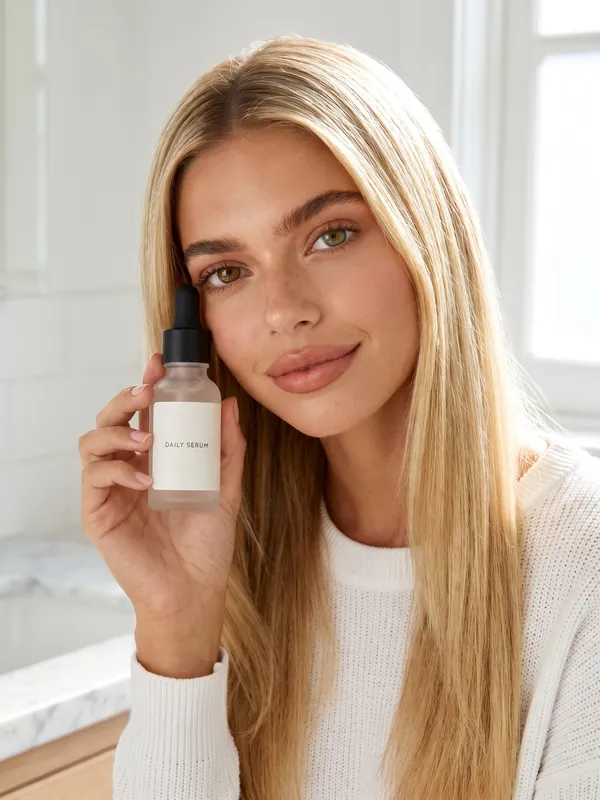
UGC stands for user-generated content: a video that a customer made, not the brand. A UGC ad borrows that look. Someone holds the product up to a phone camera, says what they think, and it runs as a paid ad. It works because it does not look like an ad.
An AI UGC video ad is the same thing with one change. The product is real, but the person holding it is an AI model.
How it differs from a normal UGC ad
| Creator UGC | AI UGC | |
|---|---|---|
| Who is in it | A real person you hire | A model you pick or make |
| What you send | The product, by post | A product photo |
| Time to first video | Days to weeks | The same day |
| New version | A new brief and a new shoot | A new line of text |
| A real opinion | Yes | No |
The last row matters most. A creator can say "I used this for a month and here is what happened". An AI model cannot, and you must not make it pretend to.
| The product photo | The UGC-style shot |
|---|---|
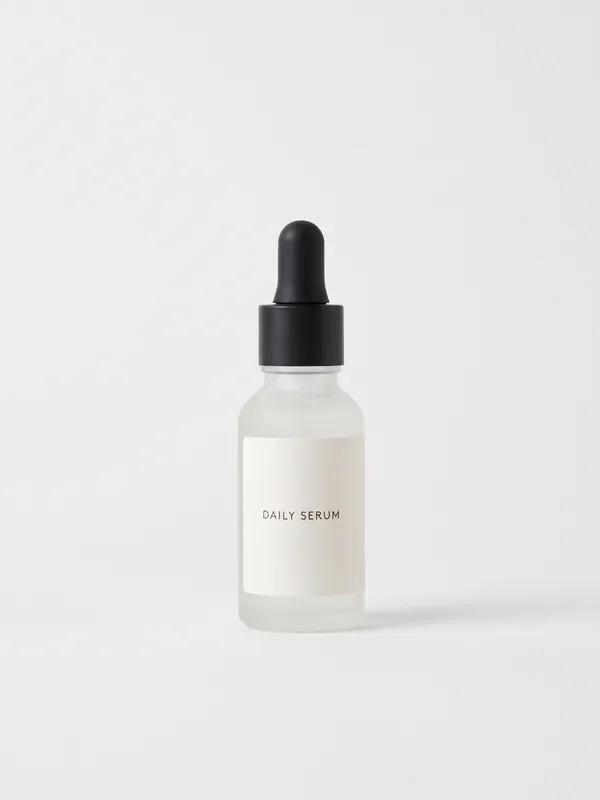 | 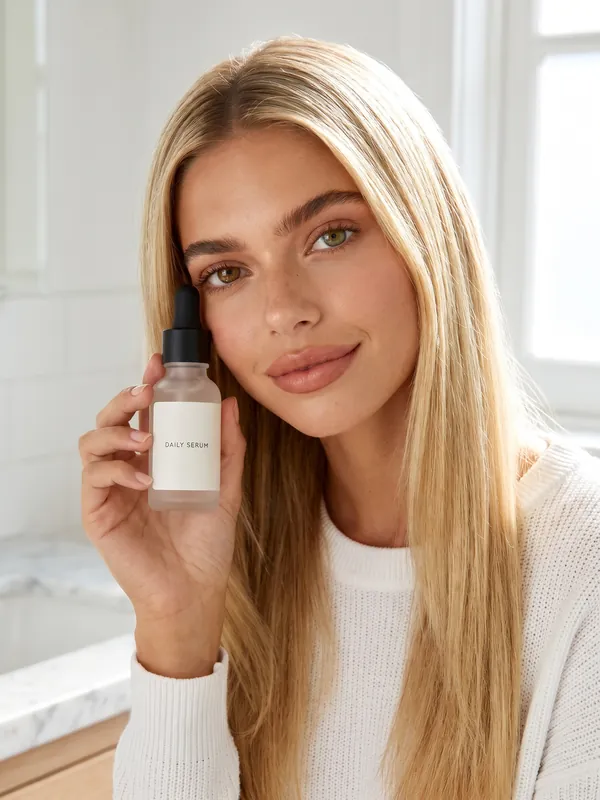 |
What they are good for
The main use is testing ideas fast. You can make five hooks today and know the winner by the end of the week.
They are also good at showing the product in use: in a hand, on a shelf, on a person, in a room. You can run the same ad with different people in it, so each audience sees a face that fits. And you can make seasonal versions, with the same product at a beach in July and by a fire in December.
Some products cannot be shipped to a creator at all. Pre-orders, samples that do not exist yet and heavy furniture are the usual cases, and a product photo is enough for all of them.
What they are not good for
- Testimonials. A made-up person saying "this changed my skin" is a fake review. In many countries that is against advertising law, and platforms remove it.
- Results over time. Before-and-after claims need a real person and real time.
- Taste, smell and feel. Nobody can honestly describe what they did not try.
- Founder stories. A founder story needs your own face and your own voice.
A simple rule covers all four: let the AI model show, and let real customers tell. Use real review text on screen, with permission, over footage of the AI model using the product.
Do they work?
They work when the ad would have worked anyway. That means a clear product, a clear reason to buy, and a first second that stops the scroll. The AI part does not make a weak idea strong. What it changes is how many ideas you can afford to test.
Three things decide the result more than the tool does:
- The first frame. It needs movement and the product, and no logo.
- One reason to buy per ad. Three reasons in one ad is too many.
- A setting that looks real. A kitchen counter beats a studio.
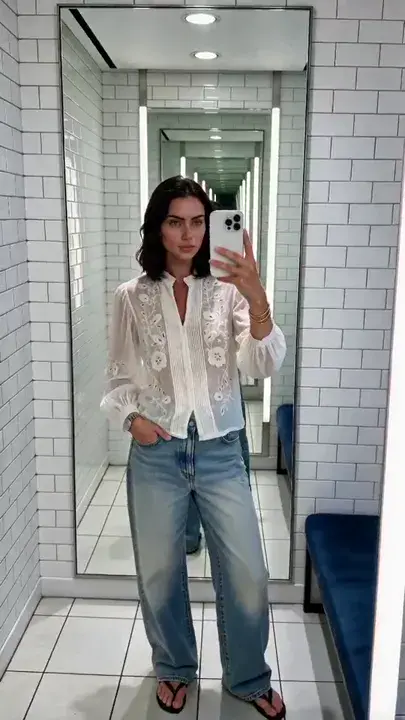
This is the look to aim for: a phone, a real room and ordinary light. The shot comes from the Flash Outfit Swap template.
Label it
TikTok asks advertisers to label realistic AI-made content, and Meta adds its own "AI info" label. Rules differ by country and they change, so check the current policy for each platform before you publish. Adding the label is cheap, and being caught hiding it is not.
How to make one
In Aiphoria, Product with a model takes your product photo and a model, and gives you several shots of the model holding, wearing or using it. A clip for every photo turns photos into short videos, and Video Shape cuts each clip tall for TikTok and Reels.
Ask the Agent for the whole test batch
Testing UGC ads means making many small versions of nearly the same thing: another model, another room, another shape. That is slow to do by hand, and it is the kind of work an agent does well.
In Aiphoria, go to Workflows & Tools and turn the Agent on. Write what you need in ordinary words, for example:
Here is my serum photo. Show three different models holding it in a bathroom, a bedroom and a car, make a short clip from each, and give me every clip in a tall shape.
The Agent turns that into a workflow and shows you each step. Before anything runs you can read the plan, see what it will cost and change any step you do not like. Then you press Run. If you save the workflow, the next batch for a new product takes one click.
The same request works from Claude or ChatGPT. You add the Aiphoria MCP connector once and then ask in the chat you already use. Your photo goes up, the workflows run, and you get a link to every finished picture or clip. Setup takes a minute, and there is a guide for Claude and one for ChatGPT.
The agent uses these skills for a UGC batch: Product with a model, A clip for every photo, Video Shape.
The short answer
AI UGC ads are a fast, cheap way to show a product in use and test many ideas. They do not replace real customers saying real things, so use both. The full set of tools is on the AI video ads page, and the weekly method is in AI video ads for an online shop.